|
The Auxiliary Air Force, destined to play a major role in the air defence of Great Britain, was formed in 1925. In 1937 the Royal Navy retained independent control of shipborne aircraft by taking over full responsibility for the Fleet Air Arm - a cause they had been fighting for since 1918. The responsibility for land-based maritime reconnaissance remained with the RAF.
Under the leadership of Lord Trenchard the organisation of the RAF continued to grow in quality, not quantity. The capability for quick expansion was 'built-in' automatically. The advantage of this policy was demonstrated towards the beginning of the Second World War when the worsening situation in Europe led to such a rapid expansion of the RAF that it became necessary by 1936 to introduce
Bomber, Fighter, Coastal and Training Commands. On this solid framework the RAF was able to expand further as war approached until, at the peak of its strength during the war, it had some 9,000 operational aircraft as well as 40,000 aircraft engaged in training and non-operational duties.
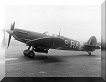 Meanwhile the RAF was engaged on many active operations and small 'wars' in Russia, in Somaliland, in operations from Iraq and Kurdistan to Waziristan. Meanwhile the RAF was engaged on many active operations and small 'wars' in Russia, in Somaliland, in operations from Iraq and Kurdistan to Waziristan.
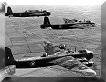 During the inter-war years, high speed flight was not neglected and the RAF won the Schneider Trophy in 1927, 1929 and 1931 at speeds ranging from 281-340 mph. It was from these aeroplanes that our eight-gunned fighters, the Spitfire and Hurricane, were developed. The wellington and Whitley bombers were also emerging. During the inter-war years, high speed flight was not neglected and the RAF won the Schneider Trophy in 1927, 1929 and 1931 at speeds ranging from 281-340 mph. It was from these aeroplanes that our eight-gunned fighters, the Spitfire and Hurricane, were developed. The wellington and Whitley bombers were also emerging.
But probably by far the most important achievement of the inter-war years was the development of radar location to detect and locate aircraft - RAdio Detection And Ranging (RADAR). As a result, by the beginning of the war we had an early warning chain of 18 radar stations along the East Coast which, together with the Observer Corps, was to provide such vital assistance during later battles.
 Between May and June 1940 Fighter Command flew more than 2,700 sorties to provide air superiority over the Dunkirk beaches, to cover the evacuation of the British Army from France. Then, when the Germans turned their attentions on Britain, our air defences were ready - Fighter and Balloon Commands, the radar chain, the Army's Anti-Aircraft Command and the Observer Corps. Between May and June 1940 Fighter Command flew more than 2,700 sorties to provide air superiority over the Dunkirk beaches, to cover the evacuation of the British Army from France. Then, when the Germans turned their attentions on Britain, our air defences were ready - Fighter and Balloon Commands, the radar chain, the Army's Anti-Aircraft Command and the Observer Corps.
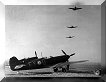 The Battle of Britain began in July 1940. Six to seven hundred fighters, mainly Spitfires and Hurricanes, flew daily against the Luftwaffe's force of 1,000 fighters and 1,250 bombers. The German invasion was planned for September, but the Luftwaffe failed to gain air superiority and the project was abandoned. They suffered crippling aircraft losses in combat, while shipping, assembled in the invasion ports, was decimated by Bomber Command.
This difficult battle between July and October 1940 was a turning point in the war against Germany. The Battle of Britain began in July 1940. Six to seven hundred fighters, mainly Spitfires and Hurricanes, flew daily against the Luftwaffe's force of 1,000 fighters and 1,250 bombers. The German invasion was planned for September, but the Luftwaffe failed to gain air superiority and the project was abandoned. They suffered crippling aircraft losses in combat, while shipping, assembled in the invasion ports, was decimated by Bomber Command.
This difficult battle between July and October 1940 was a turning point in the war against Germany.
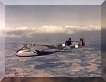 As in 1918, the end of hostilities again led to the contraction of the RAF. From over 1,100,000 officer and men in 1945, the RAF had been reduced to about 200,000 by 1950, and to less than 100,000 by 1970. Wartime conscription was continued after the war in the form of National Service, but this ended in 1962 and the RAF is now a regular force, supported by the Royal Auxiliary Air Force (RAuxAF), and the Royal Air Force Voluntary Reserves (RAF VR). As in 1918, the end of hostilities again led to the contraction of the RAF. From over 1,100,000 officer and men in 1945, the RAF had been reduced to about 200,000 by 1950, and to less than 100,000 by 1970. Wartime conscription was continued after the war in the form of National Service, but this ended in 1962 and the RAF is now a regular force, supported by the Royal Auxiliary Air Force (RAuxAF), and the Royal Air Force Voluntary Reserves (RAF VR).
|








