|
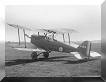 Except for the use of balloons for reconnaissance, military aviation in the UK started in May 1912, with the formation of the Royal Flying Corps (RFC). All pilots were then trained at the Central Flying School at Upavon.
The aircraft were unarmed and were intended to be used for reconnaissance in support of military and naval operations. Except for the use of balloons for reconnaissance, military aviation in the UK started in May 1912, with the formation of the Royal Flying Corps (RFC). All pilots were then trained at the Central Flying School at Upavon.
The aircraft were unarmed and were intended to be used for reconnaissance in support of military and naval operations.
In June 1914, it was decided that the use of aircraft in suport of naval operations posed special problems and the navy broke away from the RFC to form a Royal Naval Air Service (RNAS).
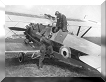 The aircraft were still used mainly for reconnaissance work and it was not until the Germans began to use fighter aircraft to shoot down our reconnaissance machines the we countered with our own British fighters to protect them.
The introduction of fighter aircraft on both sides led to the now legendary battles over the western front in which men like Ball, McCudden, Mannock, Von Richtofen, Immelmann and Boelcke fought for air superiority. The aircraft were still used mainly for reconnaissance work and it was not until the Germans began to use fighter aircraft to shoot down our reconnaissance machines the we countered with our own British fighters to protect them.
The introduction of fighter aircraft on both sides led to the now legendary battles over the western front in which men like Ball, McCudden, Mannock, Von Richtofen, Immelmann and Boelcke fought for air superiority.
By 1916, as a result of early Zeppelin raids, it was quickly realised that aircraft could also be used for bombing, and both the RFC and RNAS commenced bombing attacks against Germany. By 1917 the German Air Force used bomber aircraft to attack the UK mainland. This bombing and counter-bombing was to play a significant
part in the formation of the Royal Air Force and in fact spurred the Government into action. A committee under General Smuts was set up and its recommendations resulted in the formation of the Air Council and the establishment of the Air Ministry.
On the 1st April 1918 the Royal Air Force was born through the amalgamation of the existing RFC and RNAS.
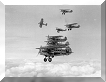 At the end of the war in November 1918, the RAF had 190 squadrons with 290,000 officers and men. In less than 2 years the strength had dropped to 30 squadrons with 25,000 officers and men, and it was then that Lord Trenchard and Winston Churchill agreed that the force should be kept at about this operational strength so that the annual
budget of about £15 million could be concentrated on building up a sound training organisation. As a result of this decision the Royal Air Force Cadet College, Cranwell (1920), the Apprentices School at RAF Halton (1922), and the RAF Staff College at Andover (1922) were opened. The opening of these establishments was the first major step
towards the provision of the high quality of aircrew and groundcrew whom we have in the RAF today. At the end of the war in November 1918, the RAF had 190 squadrons with 290,000 officers and men. In less than 2 years the strength had dropped to 30 squadrons with 25,000 officers and men, and it was then that Lord Trenchard and Winston Churchill agreed that the force should be kept at about this operational strength so that the annual
budget of about £15 million could be concentrated on building up a sound training organisation. As a result of this decision the Royal Air Force Cadet College, Cranwell (1920), the Apprentices School at RAF Halton (1922), and the RAF Staff College at Andover (1922) were opened. The opening of these establishments was the first major step
towards the provision of the high quality of aircrew and groundcrew whom we have in the RAF today.
| 







